Two Dates, One Critical Mistake: What International Professionals Get Wrong About Their U.S. Immigration Status
The Document That Does Not Mean What Most People Think
Picture this scenario: a software engineer from India receives a three-year H-1B visa stamp in her passport. She enters the United States, begins her role at a technology firm in Austin, and assumes her work authorization lasts three years from the date of entry. Two years and ten months later, she applies for a visa renewal and discovers that her authorized period of stay—as documented on her I-94 record—expired fourteen months ago. She has been out of status for over a year without realizing it.
This is not a hypothetical. Variations of this situation occur with troubling frequency across the United States, affecting engineers, researchers, healthcare workers, and business professionals who are otherwise meticulous about their careers and legal obligations. The confusion is understandable. The consequences, however, are not minor.
At Star Visa Consultants, we encounter this misunderstanding regularly. And the first step toward resolving it is drawing a clear, unambiguous line between two documents that look related but serve entirely different legal functions.
Visa Stamp vs. I-94: A Fundamental Distinction
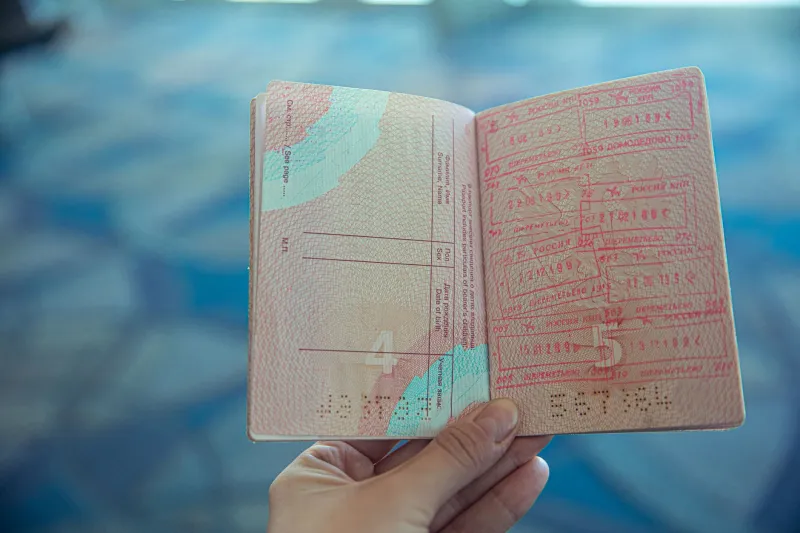
A U.S. visa stamp—the sticker or endorsement placed in your passport by a U.S. consulate or embassy abroad—is a travel document. Its sole function is to authorize you to present yourself at a U.S. port of entry and request admission. It does not, by itself, grant you the right to remain in the country.
Your I-94 Arrival/Departure Record is something else entirely. Issued electronically by U.S. Customs and Border Protection (CBP) at the time of your entry, the I-94 establishes your authorized period of stay—the actual window during which you are legally permitted to remain in the United States. The expiration date on your I-94 is the date that governs your lawful presence, not the date printed on your visa stamp.
Consider the practical implication: a professional may hold a valid 10-year B-1/B-2 visitor visa but receive an I-94 permitting only a 90-day stay. If she remains beyond those 90 days, she is out of status—even though her visa stamp remains technically valid. Conversely, a professional's visa stamp may expire while she is still inside the country, yet her I-94 may authorize her presence for several more months. In that case, she remains in lawful status and may continue working, provided her underlying petition remains valid.
Why the Confusion Is So Pervasive
Several features of the U.S. immigration system make this distinction genuinely difficult to track.
First, the I-94 is no longer a paper card stapled inside a passport. Since 2013, CBP has issued I-94 records electronically for most air and sea arrivals. Many travelers are never explicitly told that a separate digital record now governs their authorized stay. The absence of a physical document in hand makes it easy to default to the visa stamp as the primary reference.
Second, for certain visa categories—including H-1B, L-1, and O-1—the I-94 may be annotated with the phrase "D/S," meaning "Duration of Status." In these cases, the authorized stay is tied to the validity of the underlying petition approval notice (Form I-797), not a fixed calendar date. This adds another layer of complexity, because the professional must track the petition's end date independently.
Third, employers do not always provide comprehensive immigration status briefings when onboarding international hires. The responsibility for monitoring one's own status falls primarily on the individual, and without clear guidance, many professionals simply do not know what to look for.
Real Consequences of Getting This Wrong
Unlawful presence in the United States carries significant legal penalties. Accruing more than 180 days of unlawful presence triggers a three-year bar on re-entry. Accruing more than one year triggers a ten-year bar. These bars apply even to individuals who were not aware they had fallen out of status—intent is not a mitigating factor.
Beyond bars on re-entry, a lapse in status can complicate or disqualify applications for future visas, adjustment of status, and in some cases, employment-based green cards. Immigration judges and consular officers review prior periods of unlawful presence carefully, and a history of status violations—however unintentional—can cast a shadow over otherwise strong applications.
Grace Periods: What They Cover and What They Do Not
Certain visa categories include regulatory grace periods that provide a limited window after the authorized stay expires. H-1B, L-1, O-1, and several other employment-based categories offer a 60-day grace period following the end of employment or petition validity. This window is intended to allow professionals time to change status, find new sponsorship, or prepare for departure—not to continue working.
F-1 students completing their academic program receive a 60-day grace period as well, while J-1 exchange visitors typically receive 30 days. These are narrow windows, and they do not protect against the accumulation of unlawful presence if the individual remains beyond them without taking action.
Grace periods are a safety net, not a planning strategy.
How to Monitor Your Status Accurately
The following checklist represents the minimum due diligence every international professional should perform:
- Retrieve your current I-94 record at the official CBP I-94 website (i94.cbp.dhs.gov) after every U.S. entry. Verify the authorized stay date and ensure it matches your expectations.
- Cross-reference your petition approval notice (Form I-797) if your I-94 reflects Duration of Status. The petition's validity end date is your effective deadline.
- Note your visa stamp expiration date separately, understanding that it governs re-entry, not your lawful presence inside the country.
- Set calendar reminders at least 90 days before any relevant expiration to allow sufficient time for extensions, renewals, or status changes.
- Consult an immigration professional before traveling internationally if your visa stamp has expired, even if your I-94 and petition remain valid. Departing the U.S. with an expired stamp requires obtaining a new visa abroad before re-entry.
When in Doubt, Verify Early
The cost of proactive verification—a conversation with an immigration attorney, a few minutes on the CBP website, a careful review of your approval documents—is negligible compared to the cost of a status violation. The three-year and ten-year bars are not administrative inconveniences. They are life-altering restrictions that can derail careers, separate families, and close doors that took years to open.
Star Visa Consultants works with international professionals at every stage of their U.S. immigration journey, including status audits designed to catch exactly these kinds of compliance gaps before they become crises. Whether you are newly arrived or have been in the country for years, a periodic review of your immigration documents is among the most valuable steps you can take.
Two dates. One governs your right to enter the country. The other governs your right to remain. Knowing the difference is not optional—it is essential.