Sixty Seconds That Decide Everything: How to Master the U.S. Visa Interview Before You Walk Through the Door
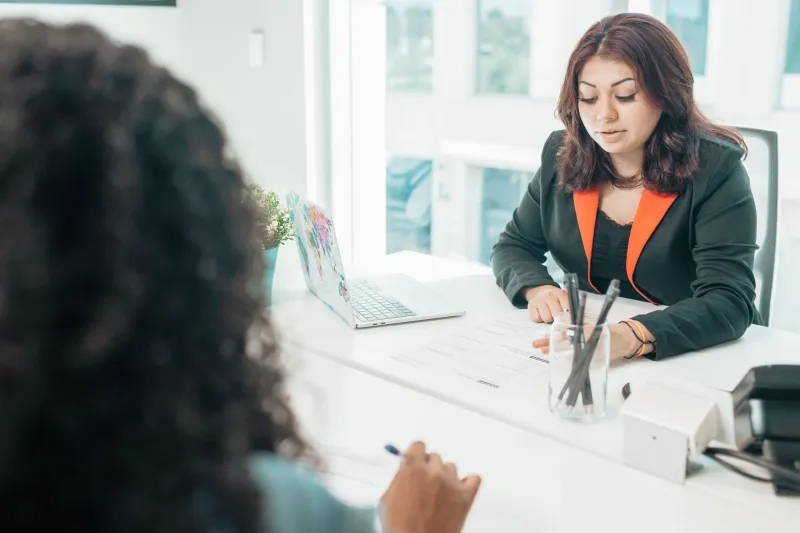
You have spent weeks — sometimes months — assembling financial records, employment letters, tax returns, and supporting documentation. Your application package is thorough. Your forms are complete. Yet for many visa applicants, all of that preparation encounters its most demanding test not in paperwork, but in a brief conversation with a consular officer at a U.S. embassy or consulate abroad.
The visa interview is widely misunderstood. Applicants tend to approach it as a formality — a final checkpoint before the stamp is granted. In reality, it functions as a live credibility assessment. Consular officers are trained to make rapid determinations, and the dynamics of that exchange carry far more weight than most applicants realize until it is too late.
What Consular Officers Are Actually Evaluating
Under U.S. immigration law, most nonimmigrant visa applicants bear the burden of proving that they do not intend to abandon their home country in favor of permanent U.S. residency. This is known as the presumption of immigrant intent, and it shapes every question a consular officer asks.
Officers are not simply verifying facts. They are reading consistency — between what you say, what your documents show, and what your personal circumstances suggest. A strong application with a weak oral presentation raises doubts. Conversely, a modest application delivered with clarity and confidence can succeed where a more elaborate file stumbles.
Key factors officers assess include:
- Ties to your home country: Property ownership, family obligations, employment contracts, and financial assets all signal that you have compelling reasons to return after your visit or program concludes.
- Purpose of travel: Your stated reason for visiting the United States must align precisely with the visa category you are applying under. Vagueness or inconsistency here is a significant red flag.
- Financial credibility: Officers want to know that you can support yourself during your stay without resorting to unauthorized employment. The numbers in your bank statements should make intuitive sense given your stated profession and lifestyle.
- Prior travel history: A record of complying with visa terms in the U.S. or other countries builds credibility. Overstays or unexplained gaps in travel history invite scrutiny.
The Red Flags That Derail Strong Applications
Some of the most avoidable denials stem not from weak documentation but from inconsistencies that emerge during the interview itself. Consider a few scenarios that illustrate how this plays out in practice.
An applicant for a B-2 tourist visa lists her purpose of travel as tourism but, when asked a follow-up question, mentions she plans to attend a cousin's wedding. The officer notes the discrepancy — a wedding trip is a legitimate reason to visit, but it is a different stated purpose than general tourism, and the inconsistency suggests the applicant may not have been fully transparent on her application.
In another scenario, a student visa applicant provides a compelling academic record and an acceptance letter from a well-regarded U.S. university. During the interview, however, he struggles to articulate why he chose that particular program over comparable options in his home country. The officer interprets this as a lack of genuine academic intent — a common red flag in F-1 interviews.
A third scenario involves an applicant who brings an impressively thick documentation binder to the window but becomes flustered when asked a simple question about her travel itinerary. Her hesitation — not the content of her documents — prompts the officer to probe further, and the interview deteriorates from there.
The throughline in all three cases is the same: credibility gaps, however small, create openings for denial.
Narrative Consistency: The Principle Most Applicants Underestimate
Every element of your visa application tells a story. Your DS-160 form, your supporting documents, your financial records, and your interview responses must all tell the same story — coherently and without contradiction.
This sounds straightforward, but it requires deliberate preparation. Before your interview, review every section of your application as if you are reading it for the first time. Ask yourself whether each piece of information supports your stated purpose and whether the overall picture is logical and believable.
Common narrative inconsistencies that surface during interviews include:
- Employment letters that describe a position differently than the applicant does when asked to explain their job
- Bank statements reflecting recent large deposits that the applicant cannot explain clearly
- Itineraries that seem either implausibly packed or suspiciously vague
- Prior U.S. visa applications or visits that the applicant fails to mention until prompted
At Star Visa Consultants, we work with clients to conduct pre-interview document reviews specifically designed to identify these inconsistencies before they surface at the consulate window.
How to Present Documentation Without Overwhelming the Process
Bringing documentation to a visa interview is appropriate and often expected — but how you present it matters considerably. Officers are managing high volumes of interviews and do not have time to sort through an unorganized stack of papers.
Organize your materials in a logical sequence that mirrors the likely flow of questions. Lead with your primary supporting documents — your invitation letter, enrollment confirmation, or employer letter — and keep supplementary materials accessible but not obtrusive. If an officer asks for something specific, you should be able to locate it within seconds.
Equally important: do not volunteer documents that were not requested. Unsolicited materials can create confusion or inadvertently introduce information that prompts additional questions you were not prepared to answer.
Preparing for the Questions You Hope They Won't Ask
Effective interview preparation does not mean rehearsing only the answers you feel confident about. It means anticipating the questions most likely to expose weakness in your application and developing honest, well-considered responses.
If you have a gap in employment, be ready to explain it plainly. If your financial history shows a period of instability, have a clear and truthful account of the circumstances. If you have applied for a U.S. visa before and been denied, understand that this will come up — and that a candid, well-framed explanation is far more effective than evasion.
Officers are experienced at recognizing rehearsed, performative answers. Authenticity — grounded in thorough preparation — consistently outperforms scripted responses.
The Role of Professional Guidance in Interview Readiness
Many applicants arrive at their visa interview having received little preparation beyond reading a list of common questions online. While that kind of informal preparation is better than nothing, it rarely addresses the specific vulnerabilities in an individual application.
Professional consultation before an interview can help you identify the aspects of your application most likely to draw scrutiny, refine how you articulate your purpose and ties to your home country, and build the kind of confident, consistent presentation that consular officers respond to positively.
The interview itself may last only a minute or two. But the preparation behind it — done correctly — can take that brief window and turn it into the approval you have been working toward.
Star Visa Consultants provides personalized guidance for U.S. visa applicants at every stage of the process, including pre-interview preparation and documentation review. Visit starvisaconsultants.com to learn how we can help you put your strongest case forward.